
September 10, 2026 · RV Fun Center
Slide-Out Care: Small Habits That Prevent Big Repairs
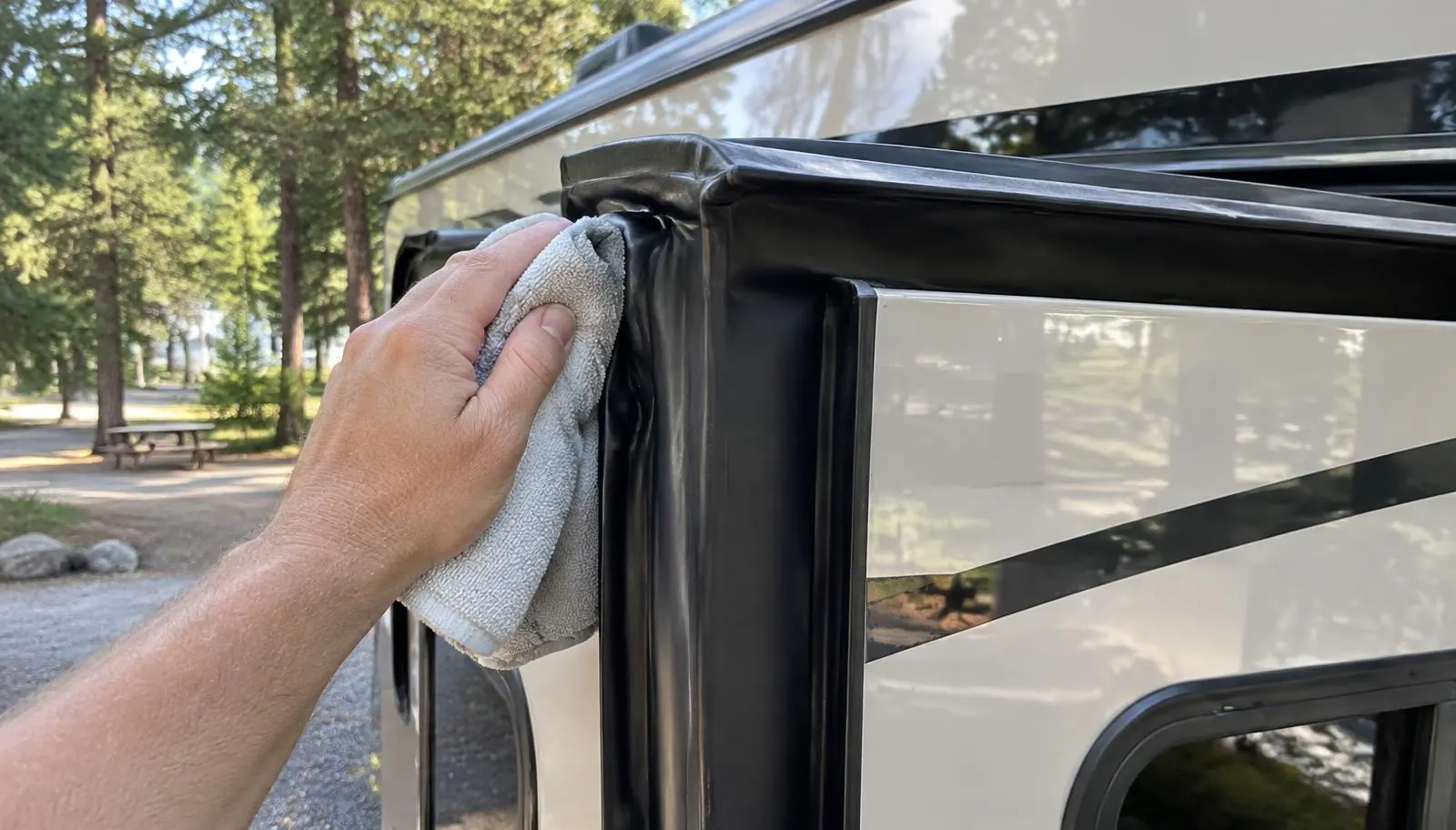
Slide-outs turn a narrow RV into a comfortable living space, but they are also some of the hardest working mechanical parts on the coach. Each time you open or close one, a motor or hydraulic pump moves hundreds of pounds of wall, floor, and furniture through a tight opening. Small problems add up quickly.
Most slide-out trouble does not start with a sudden failure. It starts with a habit, or a missing habit, repeated over many trips. Here are the ones that make the biggest difference.
Clear the top of the slide before you bring it in
The roof of a slide-out collects whatever falls on it: leaves, pine needles, twigs, sand blown in on a windy beach day, and in some places even acorns. When you retract the slide, all of that gets dragged into the top seal and can be pulled inside the wall, or it can tear the seal on the way in.
If your slide does not have a topper awning, take a look at the slide roof before you close it, especially after camping under trees or near the dunes. A soft broom with an extension handle works well from a step ladder. If you do have a slide topper, check that it is not sagging and holding water or debris.
Keep the seals clean and conditioned
Slide seals are rubber wipers and bulb seals that close the gap between the slide box and the RV wall. They keep out water, dust, and air. Sun, heat, and dry Santa Ana conditions can make them stiff and brittle, and a brittle seal cracks.
A few times a year, wipe the seals with a damp cloth to remove grit, then apply a rubber seal conditioner made for RVs. Avoid petroleum based products, which can break down some rubbers. While you are there, look for flattened spots, tears, or sections that have pulled loose from their track. Catching those early keeps water out of the walls and floor.
Watch the slide while it moves
Stand outside and watch your slide go in and out at least once every trip. You are looking for a few things.
- Does it move at a steady speed, or does it hesitate or jerk?
- Does one end lead the other? A slide that travels crooked can bind and wear gears or cables unevenly.
- Is the gap between the slide and the wall even all the way around once it is closed?
- Do you hear new noises, like clicking, grinding, or straining?
Any change from normal is worth noting. It is much easier to adjust a slide that is slightly out of square than to repair one after something breaks.
Give it enough voltage
Electric slide motors need strong battery voltage to work properly. A weak or partly charged battery can make a slide run slowly, stop partway, or strain the motor. Before you open or close a slide, make sure your batteries are charged. Many owners find it helps to run the slide while plugged into shore power or with the engine or generator running, if the manufacturer recommends it.
If your slides seem to slow down over a trip, it may be a battery issue rather than a slide issue. Keep an eye on both.
Check the floor and the path
Before you retract, make sure nothing is in the slide's way inside the coach. A shoe, a rug edge, a cooler, or a bag left on the floor can jam the slide or damage the floor and trim. On the outside, make sure the slide has room to extend without hitting a post, tree, picnic table, or hookup pedestal.
Also level the RV before you extend slides. A badly unlevel coach puts the slide and its mechanism under extra twisting stress.
What not to force
- Do not keep holding the switch if the slide stops. Let go, look for an obstruction, and check your battery.
- Do not push or pull on a slide by hand to help it along unless your manual describes a manual override procedure.
- Do not drive with a slide that will not fully retract or lock. Call for help instead.
- Do not use a slide as a step or lean heavy items against it.
A quick slide habit list
- Level first, then extend.
- Clear the slide roof before retracting.
- Clean and condition seals a few times a year.
- Watch the slide move every trip.
- Charge batteries before using slides.
- Never force a slide that has stopped.
When to bring it in
If your slide moves crooked, makes new noises, slows down even with good battery voltage, or lets in water, have it checked before it gets worse. Our Oceanside shop works on electric and hydraulic slide systems and can find the cause and fix it before a small problem becomes a stuck slide on your next trip.