
September 24, 2026 · RV Fun Center
Salt Air and Sun: Protecting Your RV Roof on the San Diego Coast
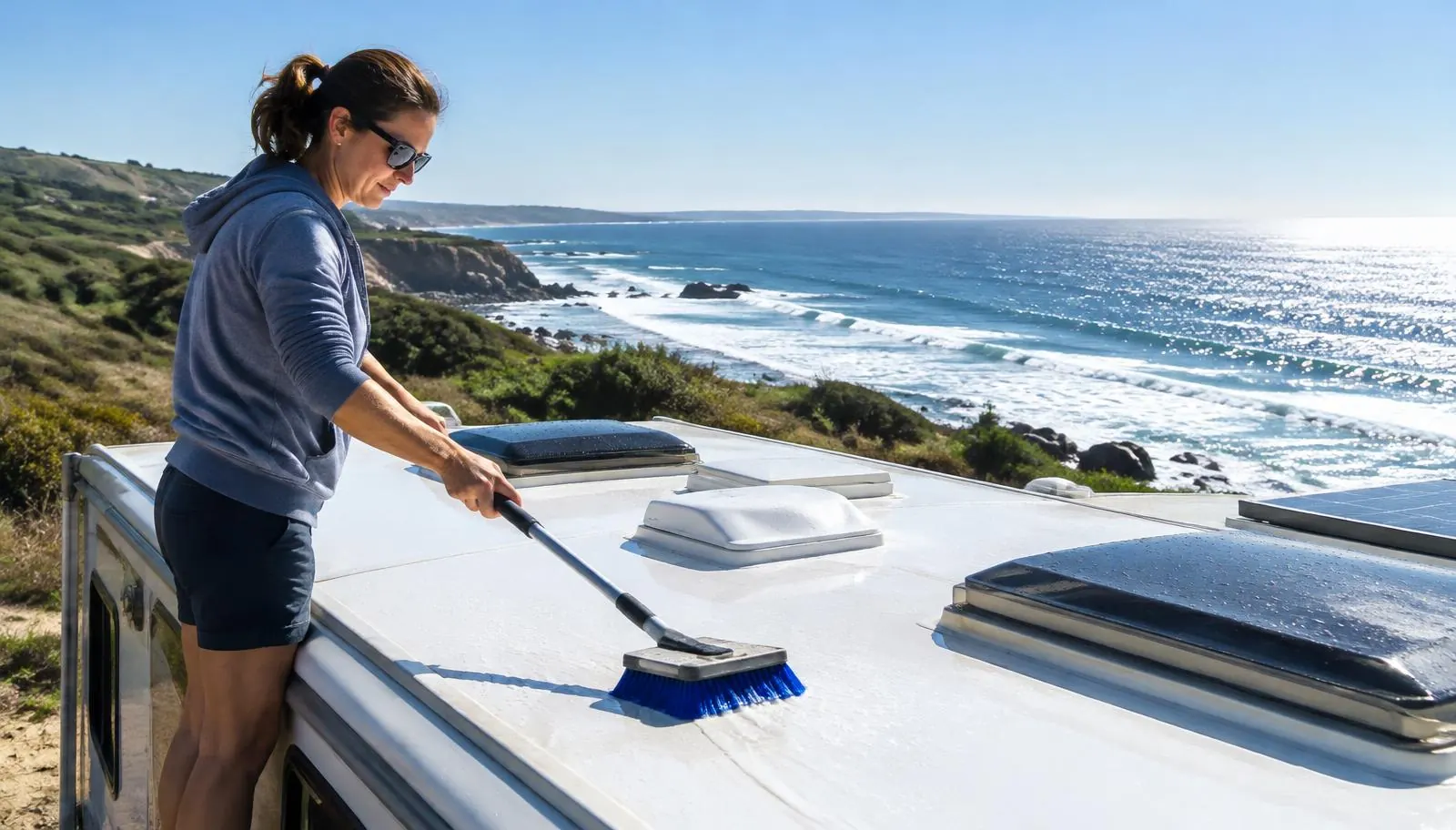
If you park your RV anywhere between San Clemente and Solana Beach, your roof is working harder than most. It sits under some of the most consistent sunshine in the country, and on many days a light film of salt settles on it from the marine layer. Neither one causes a leak overnight. Together, over a few seasons, they wear down the materials that keep your RV dry.
The roof is also the part of the RV owners see least. Most people only climb up when something is already wrong. A little regular attention changes that.
What UV actually does to your roof
Most RV roofs are either a flexible membrane, often a rubber type, or fiberglass. Around every vent, skylight, antenna, solar mount, and the A/C unit there is sealant, usually a self leveling lap sealant on top and other sealants along the edges.
Ultraviolet light breaks down the chemical bonds in these materials. Membranes slowly lose flexibility and can turn chalky. Sealant shrinks, hardens, and develops hairline cracks, especially where it was applied thin. Once it pulls away from a fixture, water has a path in. Heat makes it worse, because the roof expands in the afternoon and contracts at night, flexing those weak spots thousands of times a year.
Why salt air matters
Salt is hygroscopic, which means it attracts moisture. A salty film holds dampness against the roof surface and fasteners longer than a clean surface would. Over time it can speed up corrosion on metal parts like screws, vent frames, ladder mounts, and roof rack hardware. Rusting fasteners can loosen and lift the sealant around them.
Salt and grime also make it harder to see small cracks, which is one more reason to keep the roof clean.
Cleaning the roof safely
Plan to clean your roof a few times a year, and more often if you camp at the beach. Safety comes first.
- Only walk on the roof if your RV's manufacturer says it is walkable. Some roofs are not designed to hold your weight.
- Use a sturdy ladder, have someone hold it, and avoid wet or windy days.
- Stay off skylights and vent covers. They will not hold you.
- Rinse first to remove loose salt and sand.
- Use a soft brush and a cleaner made for your roof type. Avoid petroleum based or harsh solvent cleaners, which can damage membranes.
- Rinse thoroughly so no cleaner residue is left behind, and keep runoff off of your sidewalls as much as possible to avoid streaking.
What to look for once it is clean
With the roof clean and dry, walk it slowly, or inspect from a ladder at each corner if it is not walkable. Look closely at:
- Every sealant bead around vents, skylights, antennas, and the A/C. Look for cracks, gaps, or sections that have lifted.
- Front and rear caps where the roof meets the walls. These seams flex the most when you drive.
- Screw heads and any rust stains around them.
- Solar panel and rack mounts.
- The edge trim along both sides of the roof.
- Any bubbles, tears, or soft areas in the membrane.
Take photos of each area every time. Comparing them season to season is the easiest way to notice slow changes.
Storage makes a bigger difference than most people think
Where your RV spends the weeks between trips matters as much as where you camp. Covered storage, even a simple carport style structure, blocks most direct UV and keeps salt from settling on the roof. If covered storage is not available, a breathable cover designed for RVs can help. Avoid plastic tarps, which trap moisture and can rub the surface in the wind.
If you store at home near the coast, rinse the roof after long stretches of foggy weather, and consider parking so the roof is not under trees that drop sap and leaves into the vents.
A simple coastal roof routine
- Every month: look at the roof from a ladder for anything obviously wrong.
- Every few months: rinse and gently clean, then inspect sealant and seams.
- Before and after rainy weather: check inside ceilings and around vents for any sign of moisture.
- Once a year: have a shop inspect the roof and reseal anything that is starting to fail.
When to bring it in
If you find cracked sealant, lifted trim, rust around fasteners, or soft spots, or if you see any stain on the ceiling inside, it is time for a professional look. Catching a failing seal early is a small job. Waiting until water has soaked the decking is a much bigger one. Our Oceanside shop works on RV roofs from all along the coast and can tell you exactly what yours needs.